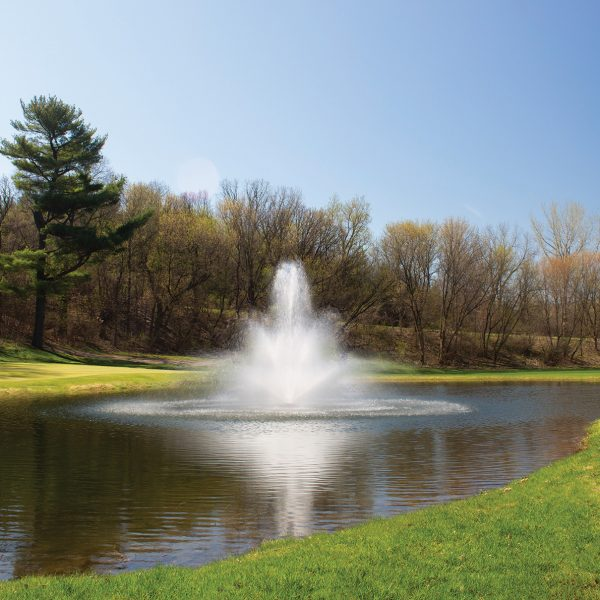
Most people buy a fountain due to the spray that it will offer. The plume catches the light, guests point at it, and the pond suddenly looks cared for. What sells floating fountains is the part you can see. What saves your pond is the part you cannot. Below the float, a motor is pulling water up from the dark, low-oxygen zone where trouble starts, and pushing it back into contact with air. Ignore that half of the machine, and you can end up with a pretty display sitting on top of a pond that is quietly going bad at the bottom.
Here is why the underside matters. A floating fountain draws water from roughly six feet down, depending on the unit and how it sits. That intake depth decides how much of your water actually gets moved. Water near the surface is already oxygenated. Water lower down is not. The pump is doing the work of dragging the stale layer up into the light and the air, over and over, all day.
How Water Layers Form In A Pond
Ponds separate themselves in warm weather. Warm water floats on top. Cold, denser water settles below. The two stop mixing, and the lower layer runs out of oxygen because nothing is replacing what the sediment and bacteria consume. This is thermal stratification, and the U.S. EPA has documented how it drives oxygen loss in the deeper zone.
The results eventually surface.
- Algae blooms that return faster after each treatment.
- Fish crowding near the top or gulping at dawn.
- A sulfur smell after a hot spell
- Muck building on the bottom year after year
The muck is the part owners underestimate. Organic material that cannot break down properly in low-oxygen piles up. Then one hot week arrives, the layers turn over, and everything that was sitting down there mixes through the whole pond at once. Fish kills often happen the day after a storm for exactly this reason.
What the Intake and Impeller Actually Do
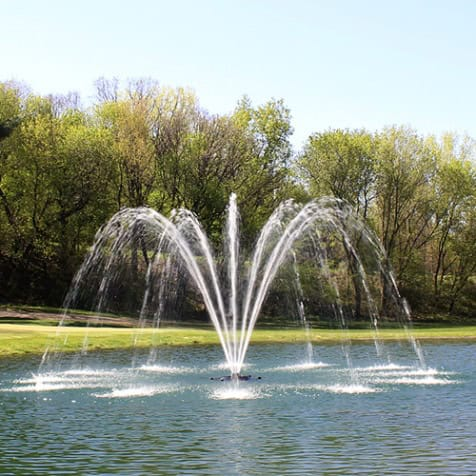
Under the float sits a motor, an intake screen, and either an impeller or a propeller. Decorative units use impellers and nozzles, which shape the pattern you paid for. Aerating units use propellers instead, and they only produce the wide V shape. Less to look at, more water moved.
That distinction is the whole decision, really.
A decorative unit gives you height and pattern. It still aerates, because any water thrown into the air picks up oxygen on the way down. An aerating unit gives up the fancy display and pushes far more volume. Perhaps you want both, and plenty of owners run a decorative fountain in the day and accept the trade.
Ask yourself which problem you are solving. If the pond looks bare, buy the pattern. If the pond smells, buy for the volume.
Why Depth Changes the Answer
Surface units work from the top down. They reach a limited distance. Past a certain depth, the bottom stays untouched no matter how impressive the plume looks from the patio.
Deeper ponds need a bottom diffuser system instead. Air goes down to the floor, bubbles rise, and the entire column turns over. The difference is not small. A fountain circulates the upper portion. A diffuser circulates everything.
People get this wrong constantly. They buy a bigger fountain for a deep pond, watch the spray get taller, and wonder why the bottom muck never shrinks. The horsepower went into height, not depth.
The Anchoring Nobody Mentions
Installation is straightforward until you reach the anchoring, which takes the longest time. The unit goes in the deepest part, usually near the middle. Then it gets held there, either tethered to the shoreline or to cinder blocks on the bottom.
Get the tether length wrong, and the fountain drifts toward the bank. Once it drifts, the intake starts pulling silt instead of water. The screen clogs, flow drops, and the motor works harder than it should.
A 120-volt unit plugs into a GFCI outlet or a control box. Anything running 208 to 240 volts is hard-wired, and an electrician should handle that portion. The rest of the install is well within reach of a homeowner with an afternoon free.
Reading the Warning Signs Early
Maintenance is light. As long as flow holds steady, the unit is fine. A noticeable drop in flow almost always means blockage, often at the filter screen around the pump.
Check these through the season.
- Spray height lower than last month
- Uneven or lopsided pattern
- Unit sitting deeper in the water than before
- Motor noise that changed pitch
Winter needs a decision too. Some brands tolerate ice. Others should come out during severe cold weather to avoid damage. Check what your specific unit calls for rather than assuming.
The pond you can see is a report on the pond you cannot. A fountain that runs steadily through summer is doing quiet work at four in the morning when nobody is watching, and that is the work that keeps fish alive in August. The spray is just the receipt.
Does your pond need surface movement or bottom circulation? Run your measurements through the pond pump size calculator, or call and describe the pond before you spend anything.